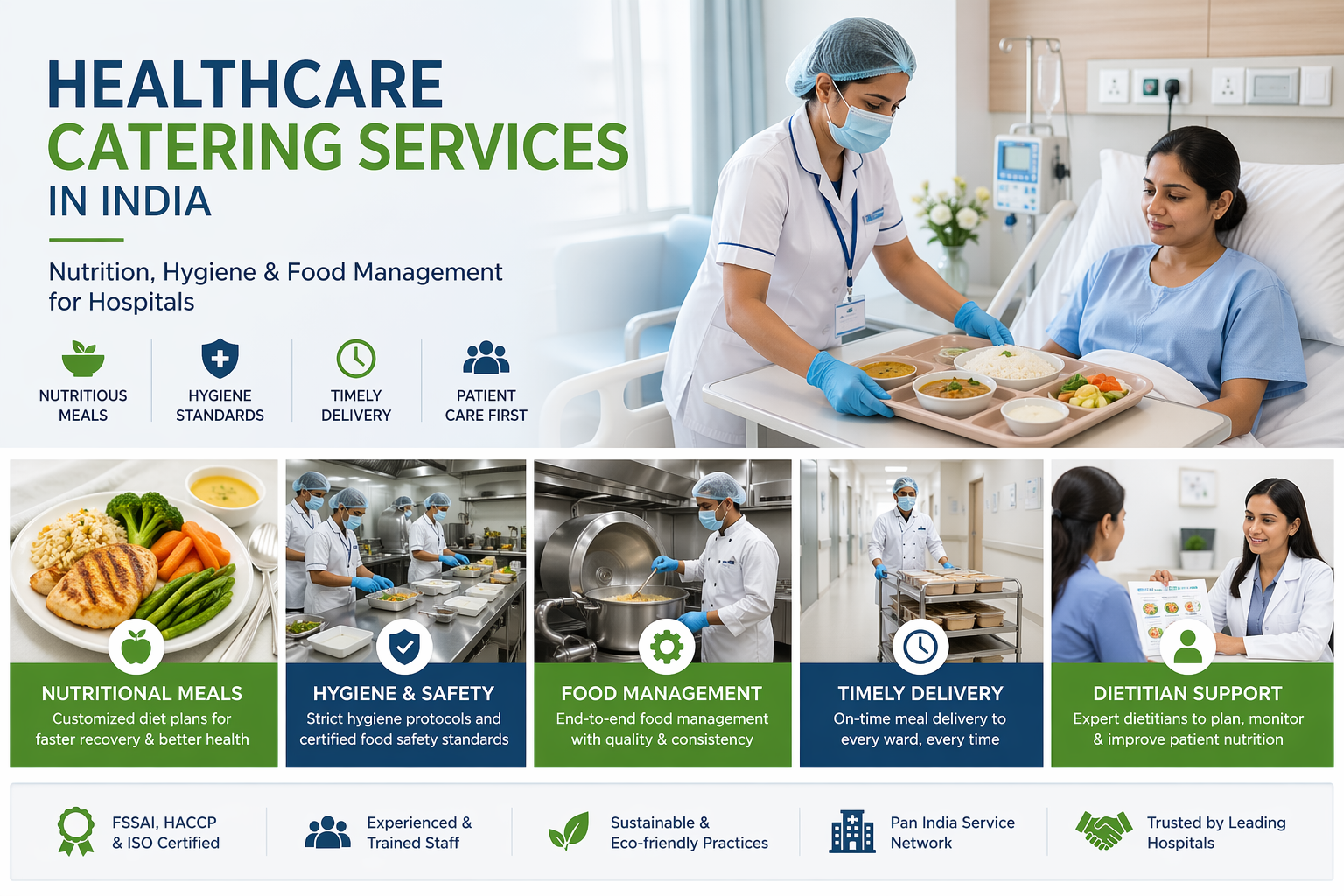
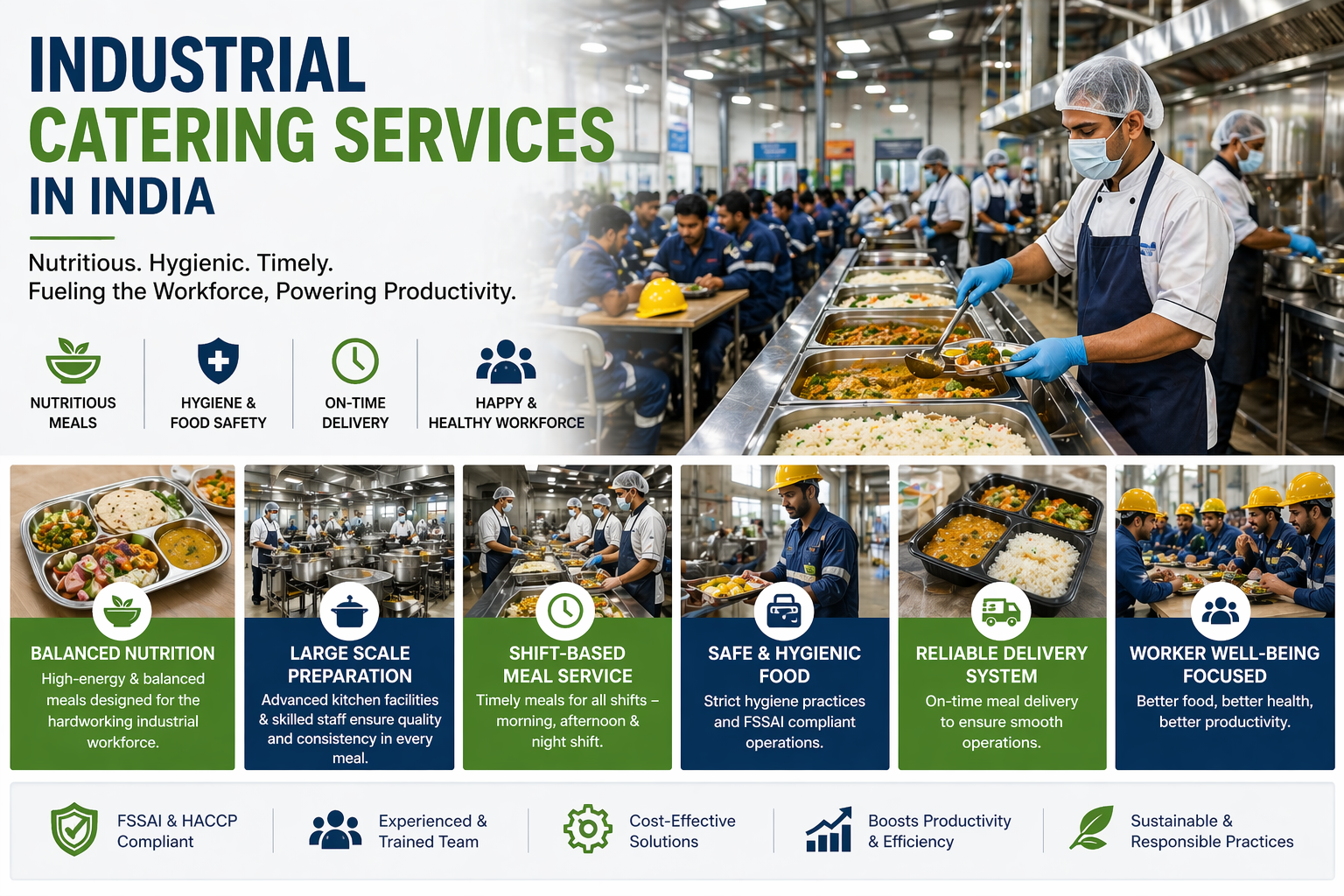
Healthcare catering services in India have evolved into a critical support system for hospitals, clinics, and healthcare institutions. Unlike traditional catering, hospital food services are directly connected to patient recovery, staff productivity, and overall healthcare quality. Today, hospitals are increasingly partnering with professional providers of healthcare catering services in India to ensure that food meets strict standards of nutrition, hygiene, and operational efficiency.In a medical environment, food is not just about taste—it is a controlled, structured, and medically influenced service. From therapeutic diets to high-volume meal management, healthcare catering requires precision, planning, and compliance with healthcare regulations.
Healthcare catering services are specialized food management solutions designed specifically for:
- Hospitals
- Nursing homes
- Rehabilitation centers
- Medical colleges
These services focus on delivering patient-specific diets, maintaining hygiene protocols, and ensuring timely food distribution across different hospital departments.
Unlike commercial catering, hospital catering must align with clinical requirements, meaning every meal is part of a patient’s treatment plan.
The Role of Nutrition in Patient Care
Nutrition plays a vital role in recovery and treatment outcomes. A well-balanced diet can:
- Accelerate healing after surgery
- Improve immune response
- Support chronic disease management
- Reduce hospital stay duration
Professional healthcare catering providers collaborate with doctors and dietitians to design customized meal plans. These plans are tailored based on:
- Medical condition (diabetes, cardiac, renal, etc.)
- Age and nutritional needs
- Prescribed calorie intake
- Cultural and dietary preferences
For example, a cardiac patient requires low-sodium meals, while a post-operative patient may need high-protein food. This level of customization makes healthcare catering services in hospitals highly specialized.
Hygiene Standards in Hospital Catering
Hygiene is one of the most critical components of healthcare catering. Patients often have weakened immune systems, making them highly vulnerable to infections. Therefore, catering providers must follow strict hygiene protocols.
Key Hygiene Practices:
- Use of sanitized kitchen environments
- Regular health checks for kitchen staff
- Proper food storage and temperature control
- Use of protective gear (gloves, masks, hairnets)
Compliance & Certifications:
- FSSAI (Food Safety and Standards Authority of India)
- HACCP (Hazard Analysis Critical Control Point)
- ISO food safety standards
Maintaining these standards ensures that food served in hospitals is safe, contamination-free, and nutritionally intact.
Food Management System in Hospitals
Hospital food management is a complex and highly organized process. It involves multiple stages:
- Menu Planning – Menus are created based on patient diet charts and hospital requirements. They must balance nutrition, variety, and cost efficiency.
- Procurement – High-quality raw materials are sourced from reliable vendors to maintain consistency and safety.
- Bulk Cooking – Meals are prepared in large quantities while ensuring uniform quality, taste, and nutritional value.
- Portion Control – Each meal is carefully measured according to the patient’s dietary plan.
- Distribution – Food is delivered to different wards on time, often using insulated trolleys to maintain temperature.
- Feedback & Monitoring – Patient feedback is collected to improve meal quality and satisfaction.
This structured system ensures that hospital catering operations run smoothly without errors or delays.
Importance of Dietitians in Healthcare Catering
- Creating personalized diet plans
- Monitoring patient nutritional intake
- Adjusting meals based on medical progress
- Coordinating with hospital staff
Their expertise ensures that food is not only safe but also therapeutically effective.
Many hospitals in India prefer outsourcing catering services to professional providers. This offers several advantages:
- Operational Efficiency – Focus on core medical services
- Cost Control – Reduced infrastructure and staffing costs
- Consistent Quality – Standardized processes
- Scalability – Suitable for small to large hospitals
- Compliance Assurance – Adherence to food safety regulations
India’s healthcare sector is expanding rapidly, with new hospitals and medical facilities being established across cities and rural areas. This growth has increased the demand for reliable and professional hospital catering services.
Key factors driving this demand include:
- Rising awareness of patient nutrition
- Increased focus on hygiene and safety
- Growth of private healthcare institutions
- Need for efficient large-scale food management
As a result, healthcare catering is becoming a specialized industry with high standards and expectations.
Integration with Modern Healthcare Systems
- Automated diet charts
- Digital meal tracking
- Real-time coordination between kitchen and wards
- Data-driven nutrition planning
Such integration reduces human error and ensures that every patient receives the correct meal at the right time.
- Reducing food waste
- Using biodegradable packaging
- Optimizing energy consumption in kitchens
These practices not only benefit the environment but also improve operational efficiency and cost management.
Conclusion
Healthcare catering services in India are no longer just an auxiliary function—they are an integral part of patient care and hospital operations. By combining scientific nutrition, strict hygiene standards, and efficient food management systems, these services directly impact recovery outcomes and patient satisfaction.
Hospitals that invest in professional catering solutions benefit from improved service quality, operational efficiency, and enhanced patient trust. As the healthcare industry continues to grow, the role of specialized hospital catering services will become even more important in delivering holistic care.