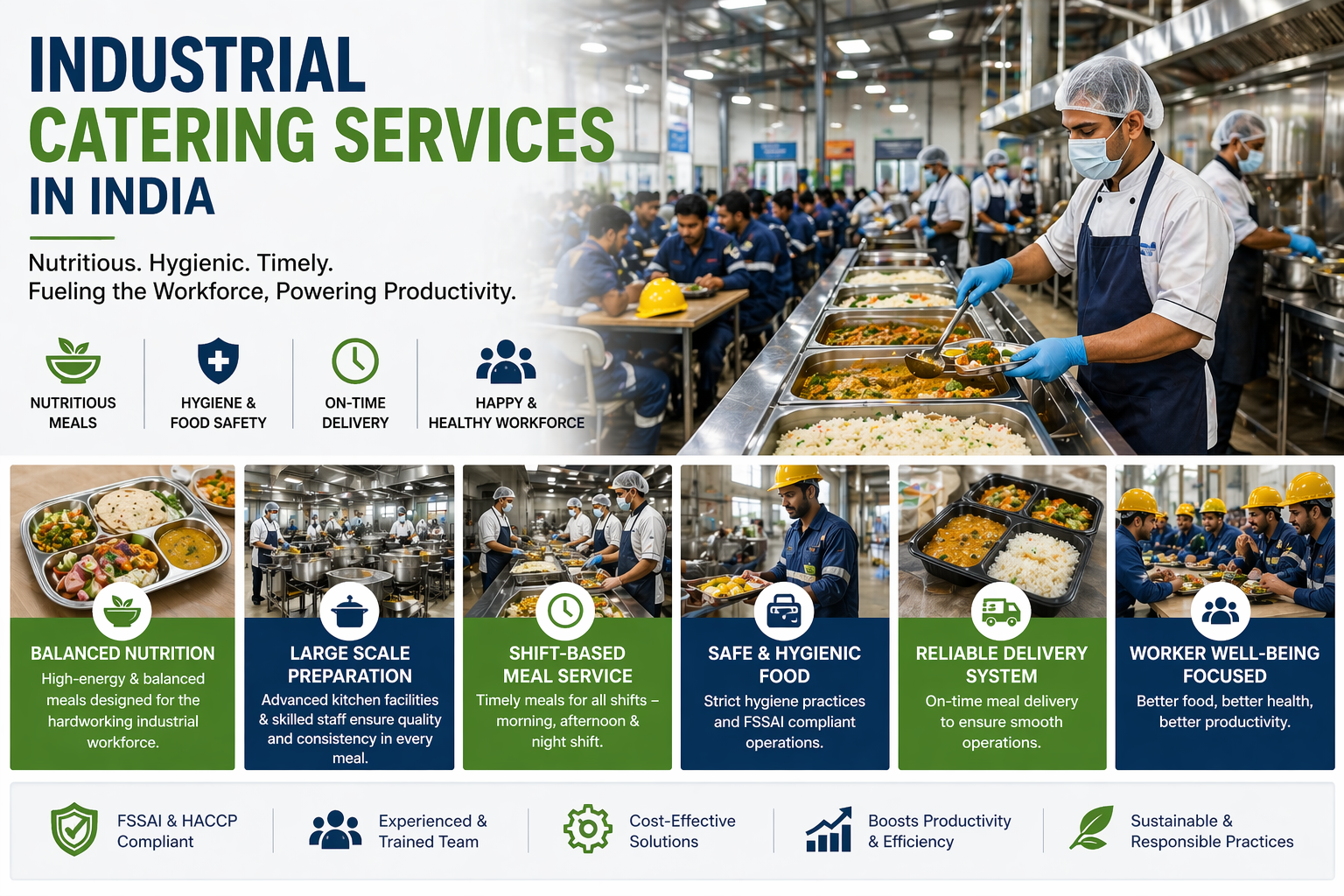
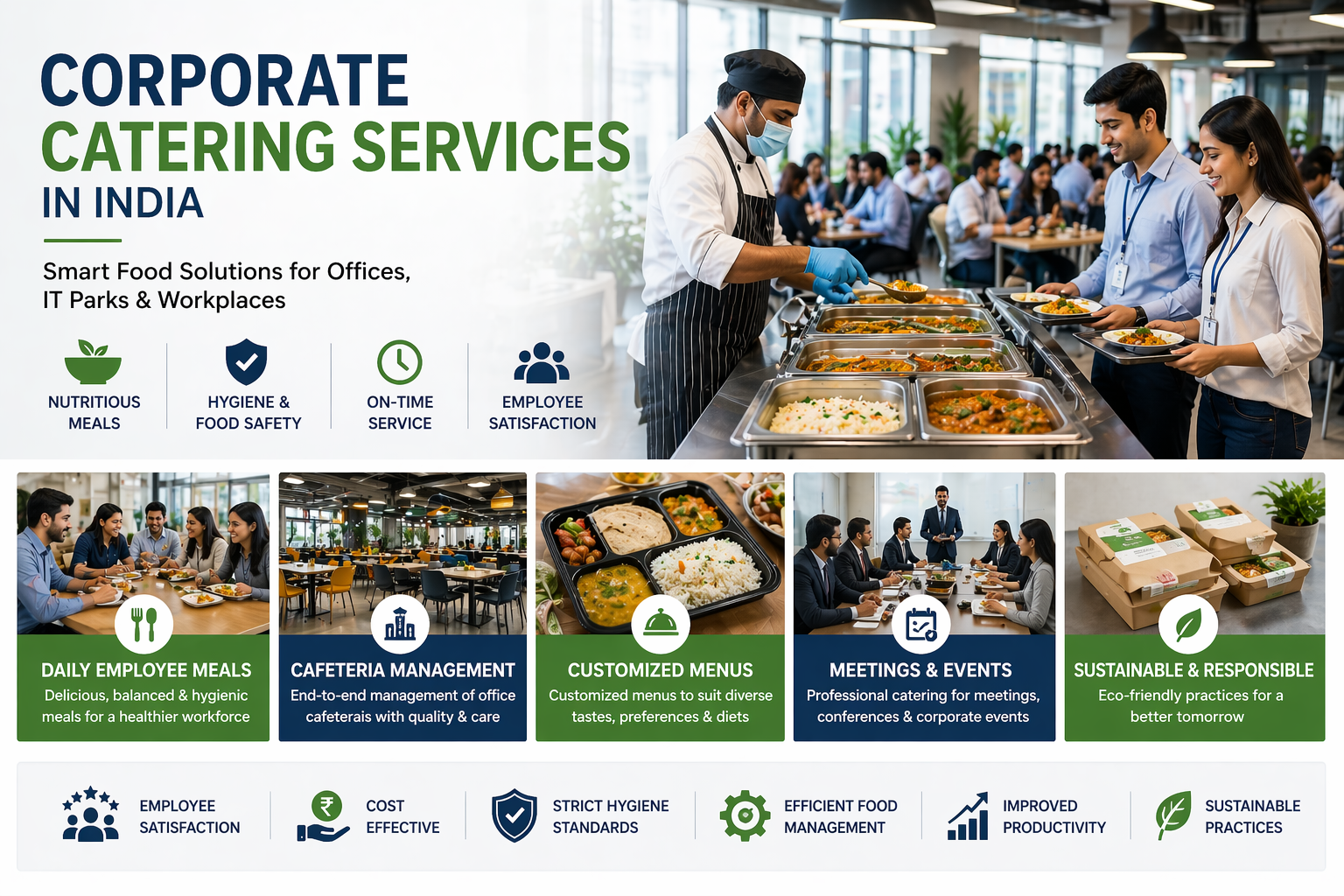
Industrial catering services in India are a critical backbone for factories, manufacturing plants, and large industrial units that operate with a sizable workforce. In such environments, food is not just a daily requirement—it is directly linked to worker productivity, health, safety, and operational efficiency. As industries expand and workforce sizes increase, the need for professional industrial catering services in India has grown significantly.Managing food services in industrial settings requires precision, scalability, and strict adherence to hygiene and compliance standards. From early morning shifts to late-night operations, catering providers must ensure that meals are delivered consistently, safely, and on time.
Industrial catering services refer to specialized food management solutions designed for factories, manufacturing units, warehouses, and large industrial establishments. These services are structured to handle:
- Daily meals for workers and staff
- Shift-based food service (morning, afternoon, night)
- Canteen and cafeteria management
- Packed meal distribution
- Nutritional meal planning for labor-intensive environments
The primary goal is to provide high-quality, hygienic, and energy-rich meals that support the physical demands of industrial workers.
In industrial setups, employees are often engaged in physically demanding tasks. Proper nutrition plays a key role in maintaining:
- Energy levels throughout shifts
- Worker health and safety
- Reduced fatigue and errors
- Improved productivity
Providing structured meals ensures workers receive balanced diets that meet their daily energy requirements.
Industrial catering is a highly organized and process-driven operation. Let’s explore the core components:
1. Menu Planning for High-Energy Needs
Menu planning focuses on:
- High-calorie, energy-rich meals
- Balanced nutrition (carbohydrates, proteins, fats)
- Regional food preferences
- Cost-effective meal options
Menus are designed to support workers performing heavy-duty tasks and ensure sustained energy.
2. Procurement & Supply Chain
Industrial catering requires large quantities of raw materials. Providers ensure:
- Bulk sourcing from trusted vendors
- Consistent supply of fresh ingredients
- Cost optimization through large-scale procurement
A reliable supply chain ensures uninterrupted service across all shifts.
3. Large-Scale Food Preparation
Industrial kitchens are built for mass food production. Key features include:
- High-capacity cooking equipment
- Standardized recipes
- Skilled kitchen staff
- Quality control systems
Maintaining consistency in taste and hygiene at scale is a key operational focus.
4. Shift-Based Meal Distribution
Factories operate in multiple shifts, requiring flexible catering schedules.
- Breakfast for early shifts
- Lunch for day shifts
- Dinner for night shifts
Meals are delivered through canteens, packed systems, or mobile distribution units.
5. Portion Control & Waste Management
Efficient portion control ensures:
- Equal food distribution
- Reduced wastage
- Better cost management
Providers monitor consumption patterns to optimize meal planning.
6. Hygiene & Food Safety Compliance
Hygiene is critical due to the large workforce served daily.
- Regular kitchen sanitization
- Safe food storage and handling
- Staff hygiene protocols
- Temperature control systems
Compliance with FSSAI and food safety standards ensures safe consumption.
Worker-Centric Catering Approach
Industrial catering follows a worker-first approach:
- Providing filling and satisfying meals
- Maintaining taste consistency
- Offering variety to avoid monotony
- Addressing dietary preferences
A well-fed workforce is more productive and efficient.
- Improved Workforce Productivity – Maintains energy levels
- Operational Efficiency – Focus on core operations
- Cost Optimization – Bulk food management
- Consistent Quality & Hygiene – Standardized processes
- Scalability – Supports growing workforce needs
- Manufacturing plants
- Automotive industries
- Textile factories
- Warehouses and logistics hubs
- Construction sites
- Industrial training centers
Key drivers include:
- Expansion of industrial zones
- Increasing workforce size
- Focus on worker welfare
- Need for efficient canteen management
Industrial catering is becoming a core part of workforce management strategies.
Modern catering systems integrate with operations through:
- Shift-based scheduling
- Attendance tracking systems
- Inventory management
- Automated reporting
This ensures alignment with production workflows.
- Food waste reduction
- Energy-efficient kitchens
- Eco-friendly packaging
These practices improve efficiency and reduce environmental impact.
- Experience in industrial catering
- Large-scale operation capability
- Food safety certifications
- Menu flexibility
- Strong logistics network
- Skilled workforce
Conclusion
Industrial catering services in India play a vital role in supporting large-scale workforce operations. By delivering nutritious, hygienic, and efficiently managed meals, these services contribute directly to worker productivity, safety, and overall operational success.
As industries continue to grow, the demand for professional catering solutions for factories and manufacturing units will increase. Investing in reliable industrial catering services not only improves workforce well-being but also enhances organizational efficiency and performance.