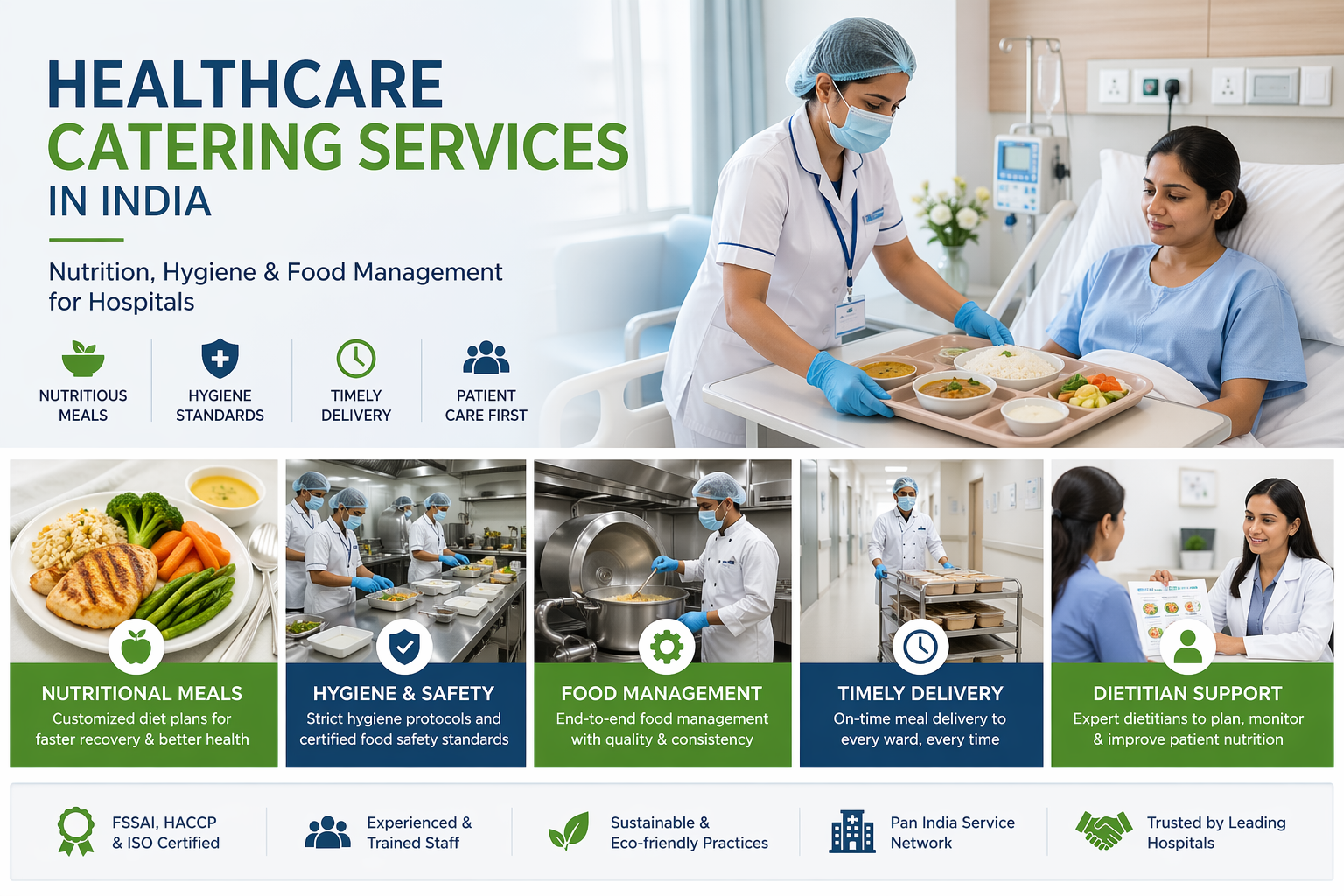
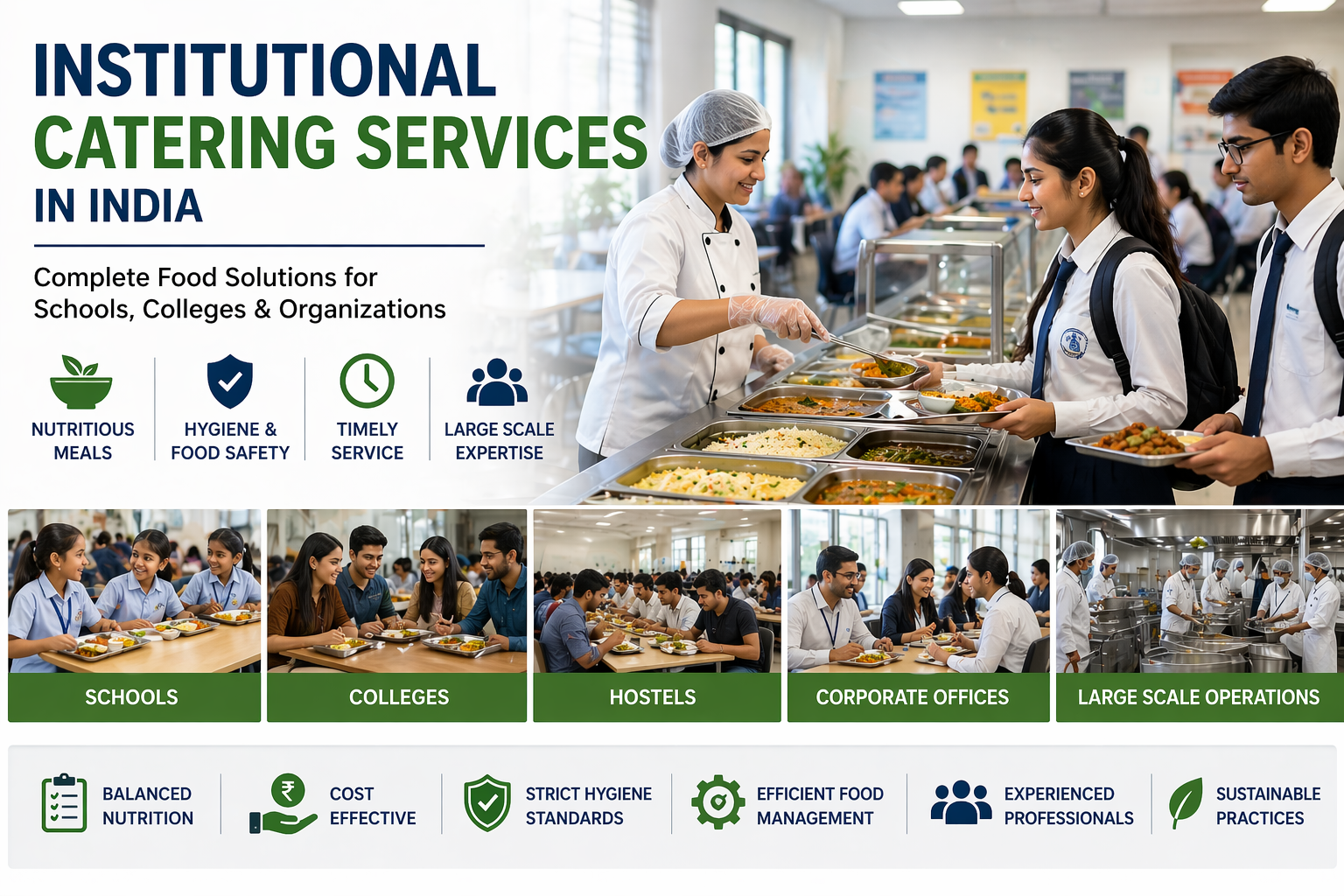
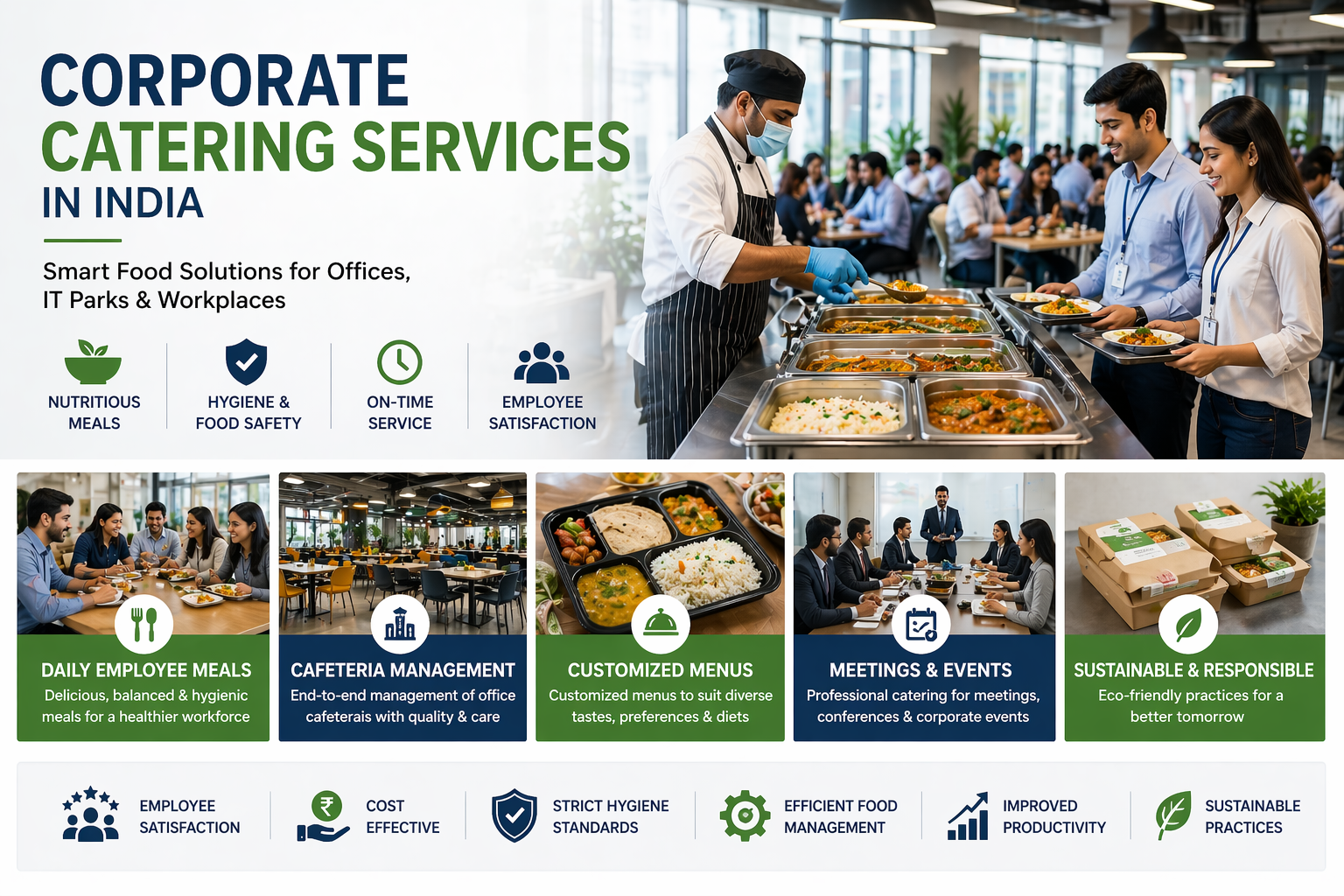
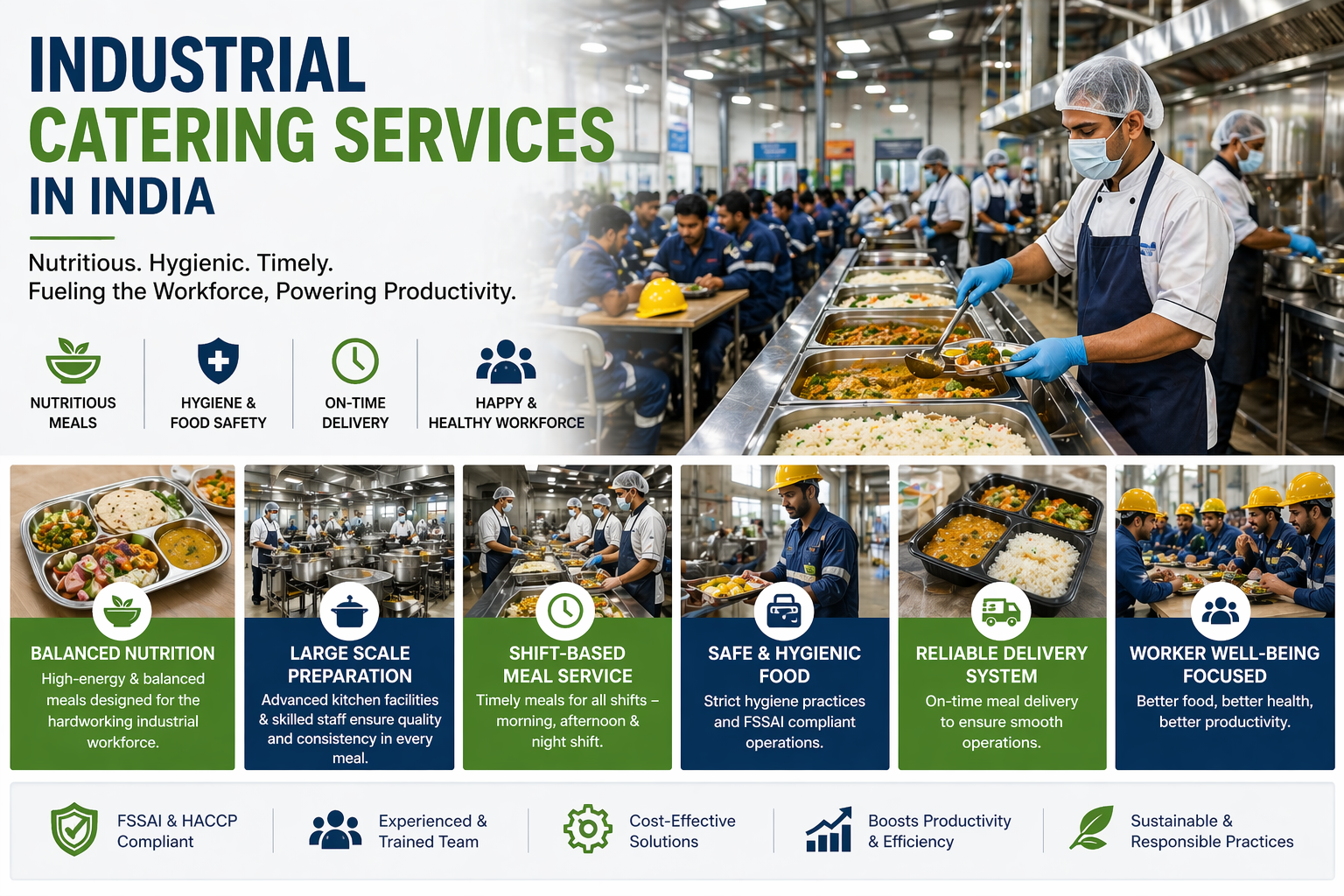
Institutional catering services in India have become an essential part of managing large-scale food operations across schools, colleges, hostels, and corporate institutions. Unlike traditional catering, institutional catering focuses on consistency, nutrition, hygiene, and operational efficiency while serving meals to hundreds or even thousands of people daily.With the growing demand for structured food services in educational and organizational environments, institutions are increasingly relying on professional institutional catering services in India to ensure quality, safety, and cost-effective meal management.In institutional environments, food is not just about consumption—it is a structured service that supports health, productivity, and overall well-being. From daily meal planning to large-scale food distribution, institutional catering requires precision, coordination, and system-driven execution.
Institutional catering services refer to specialized food solutions designed for organizations that require regular, large-scale meal services. These include:
- Schools and boarding institutions
- Colleges and universities
- Hostels and residential campuses
- Training centers and government institutions
- Corporate offices and staff cafeterias
The goal is to provide balanced, hygienic, and timely meals that meet the nutritional needs of students, employees, and residents.
Food plays a critical role in maintaining health, productivity, and overall well-being in institutions. Whether it’s a student or a corporate employee, access to nutritious meals directly impacts performance.
- Supports physical and mental development in students
- Improves employee productivity and focus
- Ensures consistent food quality
- Reduces administrative burden for institutions
Professional institutional catering services help organizations standardize food quality while managing large volumes efficiently.
Institutional catering is a structured process that involves planning, execution, and continuous monitoring. Let’s understand the core operational flow:
1. Menu Planning & Nutrition Management
Menu planning is the foundation of institutional catering. It involves designing meals that are:
- Nutritionally balanced
- Cost-effective
- Suitable for large groups
- Aligned with regional preferences
Dietitians and food experts collaborate to ensure meals meet daily nutritional requirements.
2. Procurement & Supply Chain Management
Quality food starts with quality ingredients. Catering providers ensure:
- Sourcing from reliable vendors
- Fresh and seasonal ingredients
- Bulk procurement for cost efficiency
A strong supply chain ensures consistent availability of raw materials without compromising quality.
3. Bulk Food Preparation
Institutional kitchens are designed for high-volume cooking. Key aspects include:
- Standardized recipes
- Controlled cooking processes
- Use of modern kitchen equipment
- Skilled kitchen staff
Maintaining taste, hygiene, and nutrition at scale requires expertise and structured systems.
4. Portion Control & Distribution
Food is distributed based on predefined portion sizes to ensure:
- Equal serving for all
- Reduced food wastage
- Better cost management
Meals are served through dining halls, cafeterias, or packed meal systems.
5. Hygiene & Food Safety Compliance
Hygiene is a top priority in institutional catering. Providers follow strict standards such as:
- Clean kitchen environments
- Regular sanitization
- Staff hygiene protocols
- Safe food storage and handling
Compliance with FSSAI guidelines ensures safe food consumption.
6. Feedback & Continuous Improvement
Feedback from students and staff helps improve:
- Taste and variety
- Meal timing
- Service quality
This ensures long-term satisfaction and service consistency.
Maintaining hygiene in large-scale catering is critical as food contamination can impact many people at once.
Key Hygiene Practices:
- Temperature-controlled storage
- Separation of raw and cooked food
- Regular cleaning of utensils and equipment
- Staff training in food safety
Modern institutional catering services use technology to improve efficiency:
- Digital meal planning systems
- Inventory management software
- Automated billing and reporting
- Attendance-based meal tracking
This reduces errors and improves operational transparency.
- Educational institutions (schools, colleges)
- Corporate offices and IT companies
- Government organizations
- Residential hostels and training centers
- Industrial training institutes
- Consistent Food Quality – Standardized processes ensure uniform meals
- Cost Efficiency – Bulk procurement reduces costs
- Time-Saving – Institutions focus on core operations
- Customizable Menus – Flexible meal planning
- Scalability – Easily expand services
Key growth drivers include:
- Rise in residential schools and hostels
- Growth of corporate campuses
- Focus on well-being and nutrition
- Demand for hygienic food systems
Integration with Organizational Systems
Institutional catering integrates with:
- Attendance systems
- HR systems
- Academic schedules
This improves planning and resource utilization.
- Waste management systems
- Eco-friendly packaging
- Energy-efficient kitchen equipment
Conclusion
Institutional catering services in India are a crucial part of managing food operations for schools, colleges, and organizations. By combining nutrition, hygiene, and efficient large-scale management, these services ensure high-quality meals without operational challenges.
Organizations investing in professional institutional catering benefit from improved efficiency, consistent service delivery, and better health outcomes.